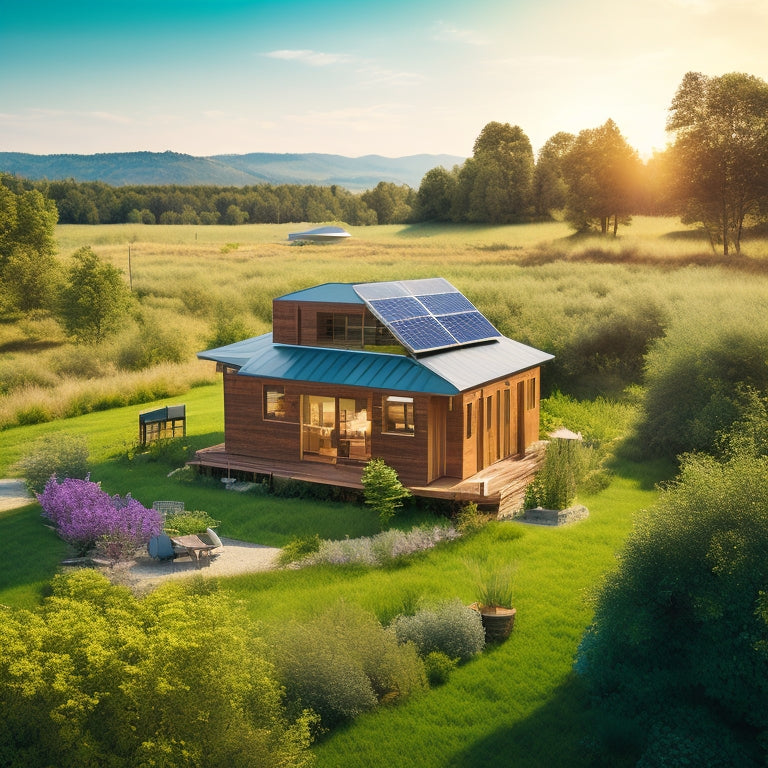
Sustainable DIY Movement Revolutionizes Housing Practices
The sustainable DIY movement is revolutionizing housing practices by empowering individuals and communities to take ownership of their living spaces. This movement prioritizes user agency, community engagement, and environmentally conscious decision-making, surpassing traditional barriers to sustainable housing. By integrating design, production, and community engagement, sustainable DIY solutions are tailored to address the unique needs of low-income communities, promoting social change and reducing environmental impact. As a result, communities are empowered to drive their own development, fostering a new era of sustainable housing practices. The true potential of this movement lies in its ability to inspire further innovation and community-led progress.
Key Takeaways
• The sustainable DIY movement empowers low-income communities to take ownership of their housing needs, surpassing traditional barriers to sustainable living.
• Community-driven development and tailored practices foster environmentally conscious decision-making and socially responsible solutions.
• Multidisciplinary approaches integrate design, production, and community engagement to create innovative, eco-friendly housing solutions.
• Co-creation with local communities prioritizes their unique needs, promoting social impact and community empowerment through design.
• By revolutionizing housing practices, the sustainable DIY movement reduces environmental impact and drives social change in low-income communities.
DIY Culture and Housing
The intersection of DIY culture and housing reveals a complex dynamics of production and consumption. The former's emphasis on user agency and community engagement can potentially transform the latter's traditional top-down approach.
This convergence has significant implications for environmental impact. DIY practices can foster sustainable consumption and production patterns. By empowering users to take an active role in designing, producing, and maintaining their living spaces, DIY culture can reduce waste and promote environmentally conscious decision-making.
Additionally, community engagement is pivotal in this scenario. It enables the sharing of knowledge, skills, and resources, ultimately leading to more resilient and sustainable housing practices.
Empowering Low-Income Communities
By leveraging DIY practices, low-income communities can surpass traditional barriers to sustainable housing, opening up opportunities for self-sufficiency and community-driven development. This approach enables community empowerment by providing access to sustainable solutions that cater to their specific needs.
Through DIY, communities can design, produce, and maintain their own housing, fostering a sense of ownership and pride. Additionally, DIY practices can be tailored to incorporate sustainable principles, reducing environmental impact and promoting social equity.
Sustainable DIY in Practice
Implementing sustainable DIY practices requires a multidisciplinary approach that integrates design, production, and community engagement to create environmentally conscious and socially responsible solutions. This approach enables the development of sustainable solutions that cater to the unique needs of low-income communities.
Community empowerment is a critical component of this approach, as it fosters a sense of ownership and responsibility among community members. By involving communities in the design and production process, DIY practices can be tailored to address specific social and environmental challenges.
This collaborative approach also promotes knowledge sharing, skill development, and resource optimization, ultimately leading to more sustainable and resilient housing solutions. By adopting a holistic and inclusive approach, sustainable DIY practices can drive meaningful change in low-income housing and contribute to a more equitable and sustainable future.
Designing for Social Impact
Frequently, designers who aim to create socially impactful products must prioritize co-creation with local communities, ensuring that their designs address specific social and environmental challenges. This collaborative approach enables designers to develop solutions that are tailored to the unique needs of the community, fostering a sense of ownership and empowerment.
By involving local stakeholders in the design process, designers can create products that not only address specific social and environmental challenges but also promote community empowerment. This design impact is critical in low-income housing, where DIY products can be designed to address specific needs, such as dividing living spaces or providing sustainable storage solutions.
Revolutionizing Housing Practices
The DIY movement's emphasis on community-driven, sustainable practices has the potential to revolutionize housing practices in low-income communities, where residents often rely on makeshift, improvised solutions to meet their basic needs. By empowering communities to take ownership of their living spaces, DIY initiatives can foster a sense of community empowerment and reduce environmental impact.
| Benefits | Outcomes |
|---|---|
| Community Empowerment | Residents take ownership of their living spaces |
| Environmental Impact | Reduced waste, reuse, and recycling of materials |
| Sustainable Practices | Adoption of eco-friendly building materials and techniques |
| Social Change | Shift from makeshift solutions to dignified housing |
Through DIY initiatives, residents can design and build their own homes, incorporating sustainable practices and reducing environmental impact. This approach not only improves living conditions but also fosters a sense of community empowerment, promoting social change and dignity.
Frequently Asked Questions
How Can DIY Products Address Cultural and Social Differences in Low-Income Housing?
"DIY products can be a game-changer in low-income housing, tackling cultural and social differences by embracing cultural sensitivity and community empowerment, allowing residents to co-create solutions that resonate with their unique needs and values."
What Is the Economic Impact of DIY Practices on Local Communities and Economies?
The economic impact of DIY practices on local communities and economies is significant, fostering job creation through small-scale entrepreneurship and promoting local sourcing, thereby stimulating local economies and preserving community character.
Can DIY Initiatives Be Scaled up for Mass Production and Distribution?
Scaling up DIY initiatives for mass production and distribution poses industrialization challenges, requiring streamlined production logistics to maintain cost-effectiveness, quality, and sustainability, while preserving the essence of DIY's community-driven, adaptive, and innovative spirit.
How Do Government Policies Influence the Adoption of DIY Sustainable Practices?
Pioneering policymakers can propel DIY sustainable practices by providing policy incentives, such as tax breaks and subsidies, while dismantling regulatory barriers, like complex permits and restrictive zoning laws, to foster a fertile environment for innovation.
What Role Do Digital Platforms Play in Promoting and Facilitating DIY Practices?
Digital platforms, such as online tutorials and social media, facilitate DIY practices by providing accessible knowledge, community engagement, and resource sharing, thereby democratizing sustainable production and consumption, and fostering a culture of collaboration and innovation.
Related Posts
-
Design Considerations for a Custom Pegboard
When designing a custom pegboard, you'll want to start by evaluating your storage needs, considering factors like too...
-

Maximum Capacity Tool Boxes for Heavy-Duty Use
You need a maximum capacity tool box that can withstand the rigors of heavy-duty use, protecting your essential tools...
-
How to Maximize Storage Space With Parts Storage Bins
To maximize storage space with parts storage bins, start by evaluating your available storage space and examining you...
